In one of our recent whitepapers, we focus on some of the key macro questions that the rapid advance of LLMs prompts. Does a large step up in productivity imply mass joblessness? Or is AI similar to previous rounds of technological advance and automation that ended up creating as many jobs as were destroyed? Is the extra economic growth enough to offset other significant downward forces on growth from a smaller working-age population and an increase in global temperatures by more than two degrees? Also, is this extra growth enough to fend off the need for governments to resort to inflation to deal with the buildup of debt? With 35 to 40 million Americans set to retire over the next decade and less immigration along with an unknown number of jobs likely to be displaced by AI, what is the net impact on the balance of power between labor and capital? It is this set of questions that guides our discussion.
The pairing of AI with demographics may, at first sight, appear odd. One is fast-moving and the other the slowest of economic forces. However, we see them as intimately related in a number of ways. While the hope is that AI might raise productivity, a shrinkage of the working-age population acts to slow growth rates. One of the principal fears of AI is that it leads to mass joblessness, but what does that mean if the working-age population is shrinking anyway? In meetings with investors, some have suggested that a shrinking working-age population may be a good thing if AI is destroying jobs, but is such thinking putting hope over evidence? AI might also change the type of jobs available and the skills required—how does that interact with an aging workforce?
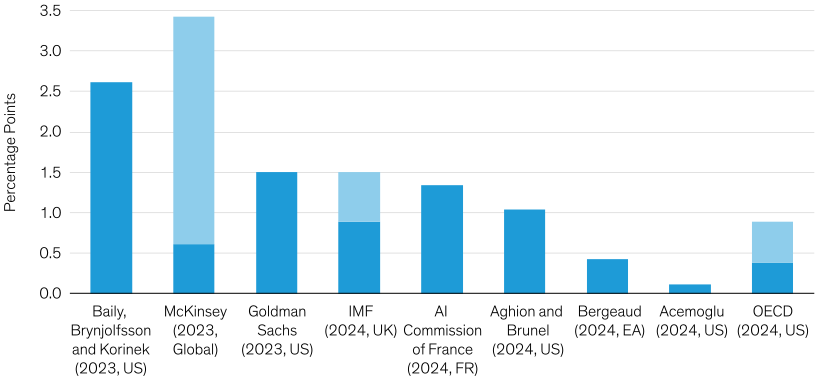
Before we get onto the topic of how the benefits of AI are distributed or what AI means for job enhancement versus job displacement, there is a huge disagreement about what the total productivity gain from AI is likely to be. Daron Acemoglu, winner of the 2024 Nobel prize for economics, has made a high-profile forecast that the annualized increase in US gross domestic product (GDP) from AI will be 1.2% over the next decade, or an increase of just 0.1% percentage points per annum (pppa). A raft of recent papers has come up with a range of higher estimates (Display), with most of them forecasting an annual increase in GDP growth rates of 1.0 pppa. Brynjolfsson notably forecasts more than 2.5 pppa.