
Will the European Central Bank Cut Rates Again?

04 November 2025
4 min read

Though reflationary hopes are high, disinflationary pressures are staying strong.

After 200 basis points of interest-rate cuts from the European Central Bank (ECB) from June 2024 through June 2025, the market senses a turning point and seems ready for higher rates ahead. We think one more cut could be in the offing.

Several factors have caused markets to expect higher rates. ECB President Christine Lagarde recently declared herself “comfortable” with the current inflation rate and deposit facility rate (both at 2%). Lagarde asserted that the ECB is “in a good place” and well positioned to face future shocks. A fiscal policy change from consolidation to expansion, notably in Germany, has raised expectations that higher infrastructure and defense spending could at last help pull the eurozone economy out of the doldrums. And current market pricing implies that the ECB policy rate will rise above 2% in three years’ time as the economy strengthens.

We envisage a trickier scenario. Despite fiscal policy loosening in Germany, we don’t see strong evidence to support a higher neutral interest rate in the eurozone. Rather, we’re wary of the forces that could push inflation below target, resulting in at least one more rate cut.

Although the ECB’s current reaction function sets a high bar for another cut, we think the medium-term risks of landing under the 2% inflation target are piling up. For now, the ECB is overlooking small, temporary deviations from the target, but if they become larger and more lasting, the Governing Council will have to respond in line with its monetary policy strategy.

Faltering Confidence Belies Near-Term Economic Turnround

We see an improved longer-term outlook for the eurozone economy: the worst-case US tariff outcome has been avoided, and fiscal stimulus is on the way. But shorter-term risks remain. For one thing, the full effects of the new tariffs have yet to be felt. Also, weak confidence indicators (Display, below) and domestic problems in some countries (notably France’s long-running political stalemate) will likely continue to restrain private consumption and investment.

Euro-Area Confidence Indicators Are Still Weak
Eurostat Surveys, Percentage Balance
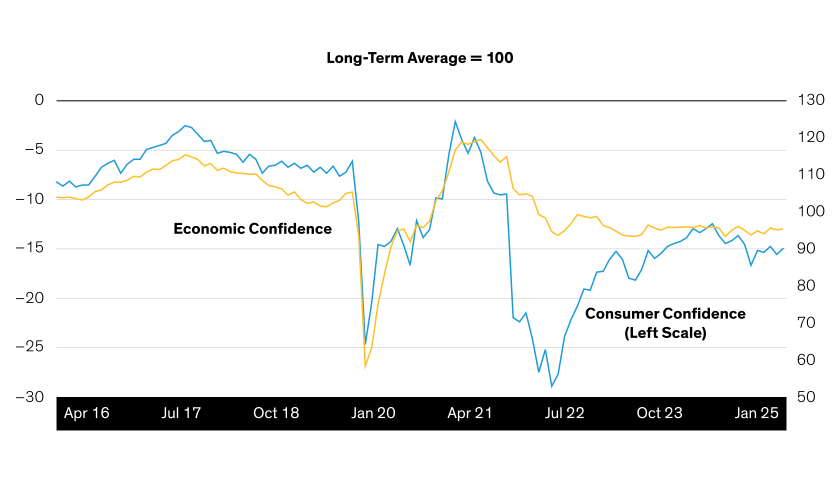
The Eurostat consumer confidence survey reading is -15 and its economic sentiment indicator is below the long-term average.

Current and historical analyses do not guarantee future results.
As of September 30, 2025
Source: Eurostat—consumer confidence survey and synthetic economic sentiment indicator (ESI)

Inflation and Wage Growth Have Further to Fall

While eurozone inflation is currently on target, it’s still declining. Services inflation (which accounts for around 46% of euro-area CPI) has so far been sticky but is at last subsiding, in response to lower growth and post-pandemic/energy-crisis normalization. Wage growth is following a similar trajectory (Display, below) and will likely contribute to further declines in services inflation. The ECB wants to keep headline inflation at target, but this dynamic threatens inflation coming in below that in the medium term.

Wages and Services Inflation Have Further to Fall
Wages and Services Percentage Change Year-on-Year
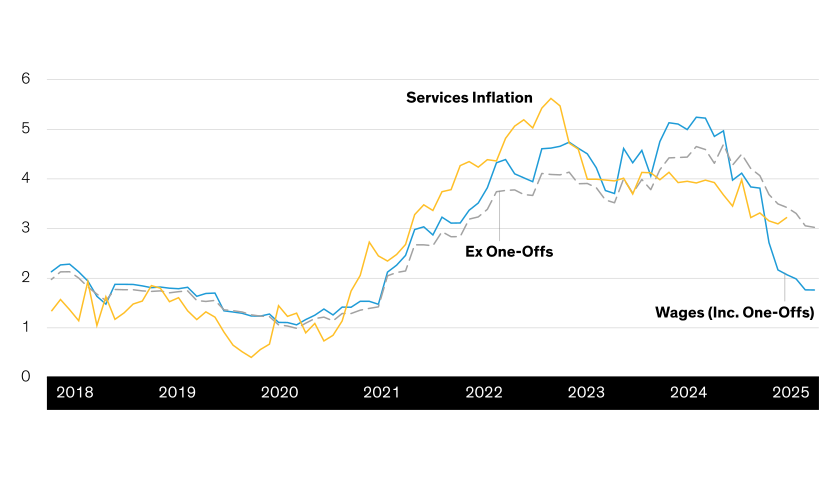
Inflation for services and wages (both including and excluding one-offs) is trending steeply down.

Current and historical analyses do not guarantee future results.
As of September 30, 2025
Source: European Central Bank (ECB)

Reshuffled Trade Flows Could Be Deflationary

In the face of US tariffs, exporting countries need to find replacement markets. As the US market has become much less accessible, China’s exports to that country have cratered while exports to the European Union (EU) have soared (Display, below).

The 2025 trade wars translate into more competition globally—and lower prices. Import prices from non-eurozone countries to the EU have declined sharply since April 2025. If that trend continues, it will put downward pressure on EU core goods inflation sooner rather than later.

Chinese Exports Are Rerouting from the US to Europe…and Depressing Prices
Eurostat Surveys, Percentage Balance
The US/EU export trend that began in 2017 has accelerated in 2025, and PPI for non-Euro Area core consumer goods has slumped.

Current and historical analyses do not guarantee future results.
As of August 31, 2025
Source: Eurostat and US Census Bureau

A Stronger Euro Highlights Downside Inflation Risks

A stronger currency typically leads to lower inflation as it makes imports cheaper, increasing competition. It also hurts exporters’ competitiveness, reducing aggregate demand. The euro is up close to 15% against the US dollar this year, peaking at 1.18.

Given our outlook for higher inflation in the US versus the eurozone, we think the euro/US dollar exchange rate will stick close to current levels. The market expects the euro to keep strengthening, moving above the 1.20 threshold in the medium term. It expects the trade-weighted euro rate (up 7% year to date against a basket of currencies) to keep strengthening, too. The ECB uses current market expectations for its internal quarterly forecasts two years forward, so if the euro stays strong or strengthens further through year-end, it will forcefully highlight the risk of undershooting the inflation target and the case for another rate cut.

A Stronger Euro Could Be Here to Stay
Euro/US Dollar Exchange Rate (Actual and Projected)
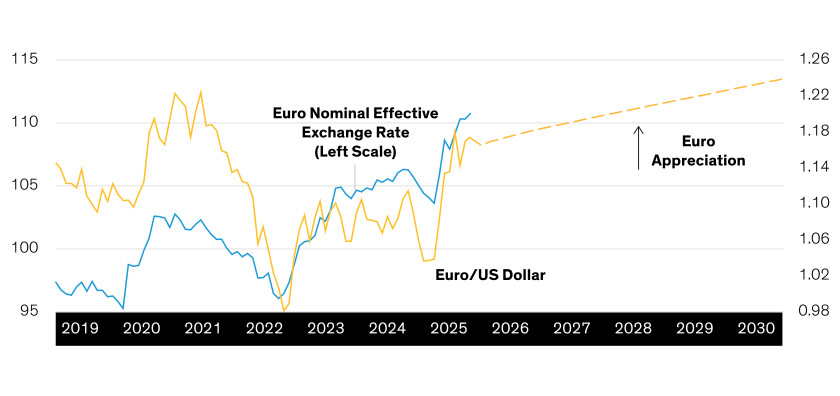
The market expects the euro to trade in the 1.22- 1.26 range versus the US dollar by 2030.

Current and historical analyses do not guarantee future results.
As of September 30, 2025
Source: Bloomberg

Duration Becomes More Attractive for Euro Investors

For euro investors, the prospect of a further rate cut has several implications, especially for the interest-rate sensitivity (duration) of their bond holdings. Increasing the duration of a fixed-income portfolio can lead to higher bond prices and capital gains when interest rates fall.

Duration will likely be an important stabilizing factor in portfolios. In our view, though, owning duration in the short end and middle of the yield curve may offer a better risk-reward profile, as these segments will likely be more influenced by ECB action and less so by the upward pressure on long-term yields from large fiscal deficits globally.

For global bond investors, we believe that higher potential inflation across other major markets supports the case for holding duration in their European assets.

The views expressed herein do not constitute research, investment advice or trade recommendations, do not necessarily represent the views of all AB portfolio-management teams and are subject to change over time.


About the Authors